
What is PINT-AE? The UAE e-invoice format explained
PINT-AE is the UAE specification for structured electronic invoices and credit notes on the Peppol network. It describes the information and validation rules that software must use. For a small business, the starting point is accurate seller, buyer, line-item and payment records.
Where PINT-AE comes from
PINT-AE is the Peppol International Invoice specialised for the UAE. It is UBL 2.1 XML: a standard envelope with named fields. The Ministry adopted it so every e-invoice on the network can be read the same way, whether your buyer is in Dubai or on the other side of a free-zone gate. Ministerial Decision No. 244 of 2025 is the implementation decision that puts the system into force; the field list itself is published on the Ministry of Finance portal as mandatory field requirements.
You do not have to like XML. You do have to be able to fill the slots. An app can write the file. It cannot invent a buyer's building name or an IBAN you never stored.
Which information should you prepare?
This is a preparation overview, not the complete specification. Required identifiers and conditional fields depend on the parties and transaction. For the wider process, read UAE e-invoicing explained.
| Group | What belongs there |
|---|---|
| Seller | Legal name, address, registration identifiers and VAT identifier where applicable |
| Buyer | Legal name, address and identifiers appropriate to the party and transaction |
| Document | Number, issue date, type, currency, payment means |
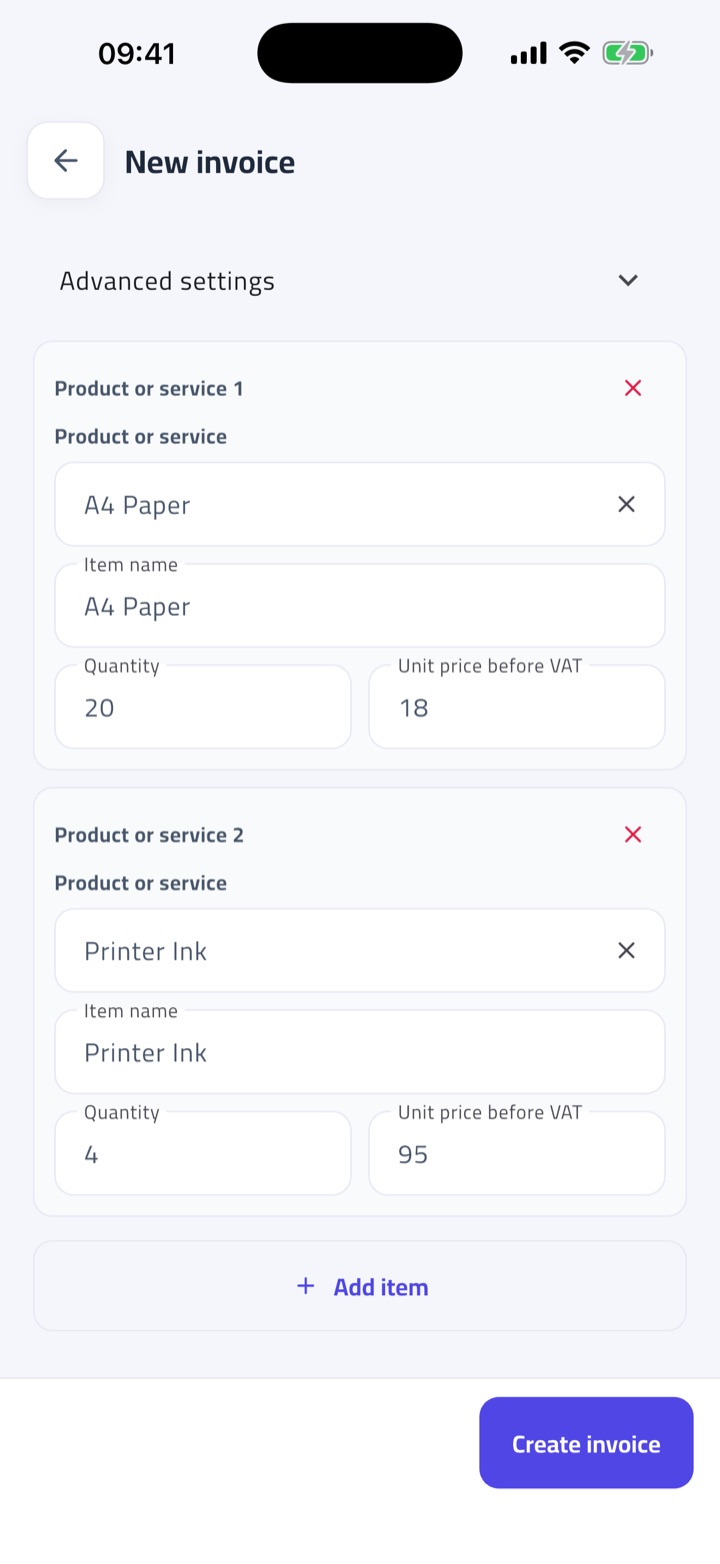
| Lines | Description, quantity, unit price, VAT category and rate |
| Totals | The document totals that follow from the lines |
| Bank | Payment account details when required by the selected payment means |
Choose the payment means that reflects the transaction, then check its associated account requirements. Do not add invented banking information to make the document look complete. Your provider should confirm which identifiers and payment details apply to your workflow.
A practical readiness example
Imagine a stationery seller reviewing a draft before completion. The following examples are illustrative checks on a few fields, not a complete invoice, valid XML sample or proof of compliance.
| Draft record | What to review before completing it |
|---|---|
| Buyer entered as “Cash customer” | Confirm whether this is a consumer or business sale. For a business buyer, obtain the actual legal details instead of treating a generic label as an identity. |
| Description entered as “Items” | Describe what was sold and check the quantity, unit price and tax treatment against the underlying transaction. |
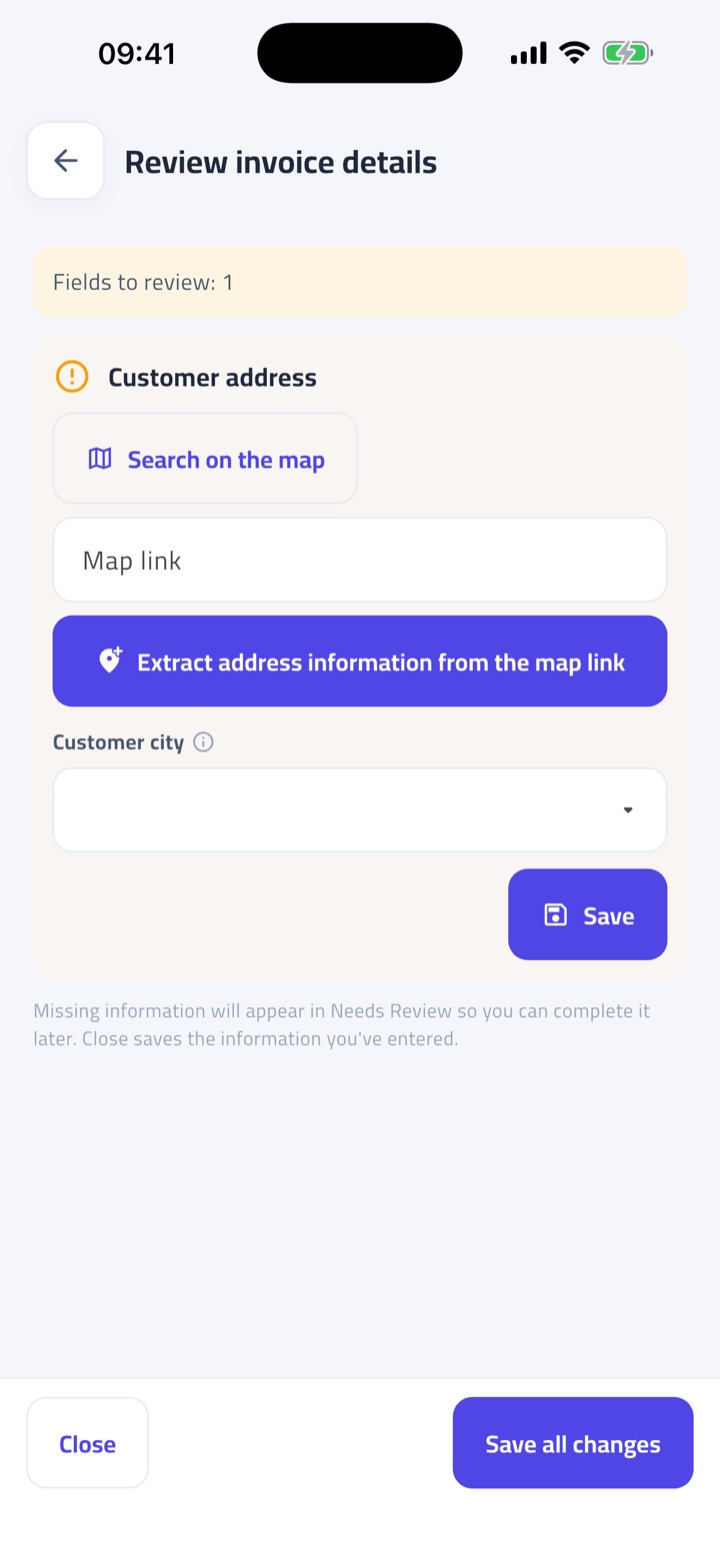
| Bank transfer selected; account missing | Confirm the correct receiving account and complete the applicable payment details. Do not switch to cash just to clear a warning. |
| PDF looks correct | Review the structured record too. A readable PDF does not demonstrate that the XML passed validation or reached a provider. |
Work through the UAE invoice-readiness checklist with one real sale before repeating the process across your records. Keep an owner for each missing item so a saved draft is not mistaken for a finished invoice.
The parts people forget
Check the buyer's address rather than storing only a city name, the tax treatment of each line rather than assuming one rate fits everything, and the payment details rather than copying a previous invoice. A validator cannot infer missing facts. Resolve the underlying data instead of repeatedly exporting the same incomplete record.
Credit notes are not a lighter document. They carry the same parties, the same addresses, and a reference to the invoice they adjust. If you cannot issue a complete tax invoice, you cannot issue a complete credit note either.
Credit notes carry the same
A credit note is the same shape with a different document type. Full or partial, it still needs seller, buyer, lines and totals. You do not edit an issued invoice to fix a quantity. You issue a credit note against it. That is true on paper today and true in PINT-AE tomorrow.
XML and PDF are different things
A PDF is a human-readable presentation; PINT-AE XML is structured data for software. Exporting that data is not the same as exchanging and reporting an invoice through the required provider process. You may still share or print a PDF, but neither action replaces that process when e-invoicing applies.
Tax identifiers and electronic routing identifiers serve different purposes. Confirm the required scheme and value with your provider, including for non-VAT-registered parties. Never invent a VAT TRN or copy another business's number to satisfy a field.
Questions owners ask
Do I have to write XML?
No. You have to supply the facts. Software writes the XML. If a field is empty in your records, it will be empty in the file.
Is a PDF still needed?
A PDF is still useful for people. It is not the e-invoice. When the rules apply, the structured file is what travels on the network.
TRN vs TIN?
Do not treat these labels as interchangeable fields. VAT registration and electronic addressing have different requirements. Confirm the identifier and scheme for each party with your provider; do not fabricate a VAT TRN for a non-registered business.
How Fatura Sahla helps
Fatura Sahla identifies missing readiness details in your language and exports PINT-AE XML for eligible completed invoices. Export is not provider transmission or a compliance certificate.
We meet you where you are, and get you e-invoice-ready with near-zero overhead.
Your sales live in notebooks, spreadsheets and sales people in the field
Photograph the paper, import the sheet, or type it in. Every path ends in one complete record, checked in plain words.
A computer, a smartphone, a tablet, or a simple phone with WhatsApp
Works in the browser and on Android and iPhone. Send an invoice photo to WhatsApp and get the finished PDF back in the chat.
A team that reads English, Arabic, Urdu, Hindi, or a mix of them
The app, the WhatsApp replies and every check speak all four. Invoices print in English or Arabic, whatever the team uses.
Fatura Sahla helps you get ready. It is not an Accredited Service Provider and does not send invoices to the Federal Tax Authority. This article is general information, not tax advice.
Last reviewed September 19, 2026